ARC Academy provides professional training and development for Speech & Language Therapists & Assistant Practitioners. With emphasis on the same Appreciative Reflective foundation as ARC Supervision & Communicology SLT Consultancy. Specialist focus on training in Clinical Supervision (reflective, solution focused, appreciative leadership) and learning and development courses for Assistant Practitioners
As the sun lingers longer and school terms wind down, ARC Academy continues to do what we do best: revisit the research, refresh our thinking, and re-formulate what therapy can look like — practically, playfully, and with purpose.
Supervision & Self-Support
Looking ahead to autumn, our theme will be Supportive and Restorative Supervision — including frameworks for stress inoculation, resilience-building, and assertiveness skills that protect the clinician as well as the client.What Works for Wellbeing?It’s easy to lose sight of your own needs in the support professions. But small things help. Research and clinical wisdom agree on a few principles:
Notice what’s depleting you (not just what’s demanding)
Schedule your breathers, not just your deadlines
Assert your boundaries early and kindly
Connect with purpose and people
We believe that burnout prevention is a skillset, not just good luck. Let’s keep sharing strategies that make this work sustainable — and joyful.
Spotlight on Leadership: The Pygmalion Effect
The Pygmalion Effect reminds us that high expectations often lead to improved performance. In therapeutic leadership and clinical supervision, this means:Believing in potential and communicating that belief clearlyCreating a culture where growth and reflection are the normModelling curiosity, calm, and flexible thinkingWhether you’re leading a team or guiding a family through intervention, the expectations you hold silently shape outcomes. Let’s be mindful of the climate we create through tone, structure, and belief.
New Course Launch: Attention, Mindfulness & Non-Directive Therapy
A new short course is now available exploring attention, regulation, and mindfulness-based therapy, with a special focus on non-directive, child-led approaches for autistic children in the Early Years and KS1. This is a Gestalt-friendly, sensory-aware offering rooted in real clinical questions — ideal for those wanting to refine their thinking around co-regulation, responsive attention, and building rapport beyond directive.
Coming Soon:
Narrative-Level Language Workshop
We’re preparing a new live session on narrative language that breathes fresh life into the classic Bloom and Lahey model, re-imagining how we work with story grammar and expressive language at different developmental stages. Watch this space — perfect for early intervention and lower primary caseloads.
Follow-on Comments & Follow-up Directives
We’ve been delving into some compelling research on how adult responses shape early expressive language. The subtle power of follow-on comments and follow-up directives is being reframed — and we’ll share strategies for how to use them meaningfully in everyday sessions and parent work.
Appendix: Quick-Reference Handout on Stress Inoculation Stress Inoculation: Mini-Toolkit for Busy Therapists 1. Cognitive Awareness – Know your early warning signs: emotional fatigue, irritability, disconnection – Track your stress triggers and habits of over-functioning 2. Assertiveness Micro-Scripts – “I’m not able to take that on right now. Let’s look at a better time.” – “That needs more time and energy than I have today.” 3. Reset & Reframe – Use 2-minute grounding resets: feet on floor, hand on chest, exhale slow – Reframe self-talk: from “I must” to “I’m choosing” 4. Small Rituals of Recovery – End each day with a completion cue: tidy desk, gratitude note, closing sentence – Use transitions (e.g., walking to car) as mental decompression space 5. Connection & Check-In – Peer check-ins every 2 weeks: 10 minutes of mutual reflection – Ask: “What’s been nourishing? What’s been draining?”
Keep this close at hand. Use it lightly but consistently. Little changes add up.
Whether you’re winding down with the school term or catching a breath between caseload cycles, we wish you space, shade, and moments of quiet sparkle this summer.
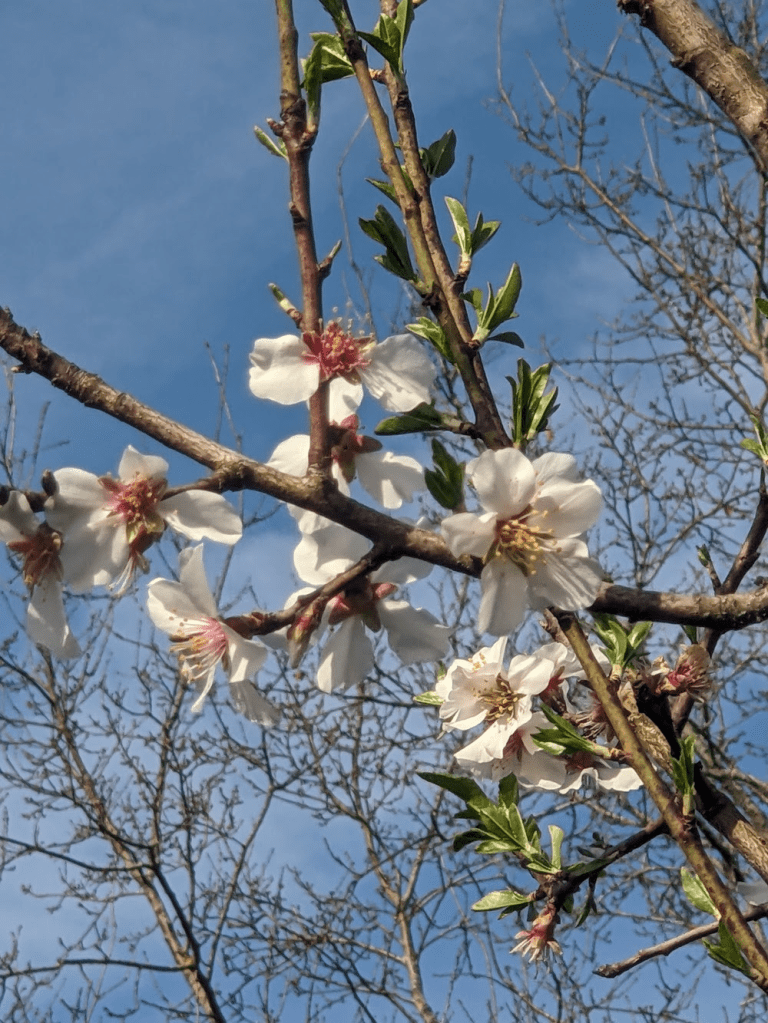
Well as I write this it is another cloudy, rainy day but we have had some sunshine and warmth in the last couple of weeks so fingers crossed the sunshine will be back soon. You can see from the photos that spring flowers and blossom are already here and proof of the blue skies. The birds are already vocal in the garden (particularly the sparrows who are always arguing it seems) and can be seen collecting nest building materials. I managed to take a break through most of January and since then I’ve spent time reviewing my training offerings and updating the calendar so the website is up to date (at least until early October and things can always change when you have family to fit in!). It does mean I missed creating a winter edition so the spring one is a little early!
Pathways to becoming a Clinical Supervisor.
I’ve been asked recently how I trained myself to become a supervisor and why there are so few training opportunities for those who find themselves asked to supervise someone.
I always reassure people that there are many pathways to becoming a supervisor and that for me an enthusiasm to make the supervisory relationship work is more important than anything.
Last summer I refreshed my reading on advanced supervision and the consensus is still that the most important factor is the relationship between supervisor and supervisee.
For me the first step was becoming a ‘good supervisee’ and it is the first step for most of us. I still feel sad when I listen to attendees on my training recalling their experience of a time when supervision didn’t work for them. There is often an aspect of ‘power’ in the dynamic, or someone who wishes to create clones of themself. The wonderful thing about our profession (and I enter my fortieth year as a practicing clinician this year) is the diversity in all our styles. If you ask 5 SLTs what to do with the same client we will probably all identify the same needs, but we will probably all suggest something slightly different for intervention. That’s one of the strengths of our profession.
So, it is the same for clinical, professional, practice supervisors … we all have a slightly different style. How boring it would be if we all had that same style.
The word “alliance,” and creating an alliance is sometimes used and it fits well for me in the model of supervision which I use.
Going back to my own pathway to being a supervisor. I still haven’t finished learning and never will. This week I discovered a framework which I’d missed – the 5 R’s of reflection which I knew immediately would fit in the supporting assistants course I run. I found Davys and Beddoes over the summer while preparing the Advancing your Supervision course and it is accessible with lots of ideas for questions to ask in a session. They also cover peer supervision and group supervision in a clear and accessible way.
I began as that supervisee, nervous of attending a group. I attended in-house NHS training and then chose modules on mentoring, reflective practice and training when I did my Masters at a School of Education at Leeds Beckett (a few years ago, but it was this century – MA in Professional Training and Development)
As part of that I conducted the usual small piece of research and mine was on awareness and use of reflective practice in SLT, with the application in clinical supervision. I was asked by my tutor to write it up for an article or series of articles in a journal like Educational Reflective PRactice journal, but never did as my daughter was young and my job as an SLT Principal leading a team was full on. I still regret not doing that, but there you go !
I attended training whenever the opportunity arose, a mixture of ad hoc days, external courses when I could find them and continual self directed learning and reflecting on my own practice.
So it isn’t a planned, progressive pathway. My learning and skill development has meandered rather than gone in a straight line.
Over time I added Solution Focused techniques, Appreciative Coaching and the wonderful Time To Think approach of Nancy Kline.
I stumbled across ACT (Acceptance and Commitment Therapy) and attended some CPD training and some of the strategies are very relevant to those of us working with families in the context of complex neurodevelopmental needs.
This year I’ve been finding out as much as I can about the informal ‘Have you got 5 minutes?” support we offer as therapists. (I have always believed this is one of the strengths of our profession and it isn’t true of all professions).
As a trainer I developed courses like ‘Being a good supervisee,” “Situational Supervision” (it’s about our casework and the situations we encounter and the people we work with as much as the clinical direction and decision making). I found myself training SLT colleagues, OT, Physio and Special School Nurses. People seemed to enjoy the training and feel empowered to supervise others, so I kept going and extended my skills as a trainer.
I thought I had left supervision behind when I moved to independent practice, but that wasn’t the case and I began by setting up a Supervision Group in response to a query on this very ASLTIP Forum! Over the next year the supervisions built up and I felt very privileged to be back in the fray …. supporting others with developing their clinical practice, reflecting on casework and that very important restorative resilient supervision which we all need at times.
More recently it’s been developing the Clinical Supervision Portfolio of online training courses which I offer at ARC Supervision. ARC stands for Appreciative, Reflective Conversations – and that’s at the essence of what we do in clinical supervision in SLT.
So, I didn’t go through a planned formal process to become an experienced supervisor, but I didn’t in my development as a clinician either.
In one of the lockdowns we were stuck in France and I began writing a book about supervision for Speechmark, called Reflective Clinical Supervision in SLT. I wish I had written a more practical book, but looking back I think I wanted to gather together all my learning and experience in SLT and add it to the literature.
What I have learned is that everyone’s pathway to becoming an experienced supervisor is different in the same way as routes to becoming an experienced therapist. We will all have different styles – and that’s ok. As long as our supervision isn’t a ‘cosy club’ and there is some challenge (which can be a gentle challenge) and we are open to and learning from our experience.
For me the key is to seize the opportunities, stay open to new ideas and remember it is that ‘alliance’, that relationship which is the cornerstone of effective supervision.
With Best Wishes
See you next time
Ruth
The Supervisor – Supervisee Relationship
Following on from the above, research is evidencing more and more the importance of the quality of the relationship being key to successful supervision.
That brings the work of Nancy Kline to mind, in paricular ‘Time to Think’ and ‘The Promise that Changes Everything’.
One of my favourite quotes is:
There is also her 10 components of thinking environments:
There is a really nice youtube video from the University of Huddersfield taking you through this.
(Note: you may need to refresh the tab when it opens!)
Nancy Kline’s work features in some of my training days and I will be putting a workshop based on Nancy Kline’s Time to Think in the calendar for later in the year.
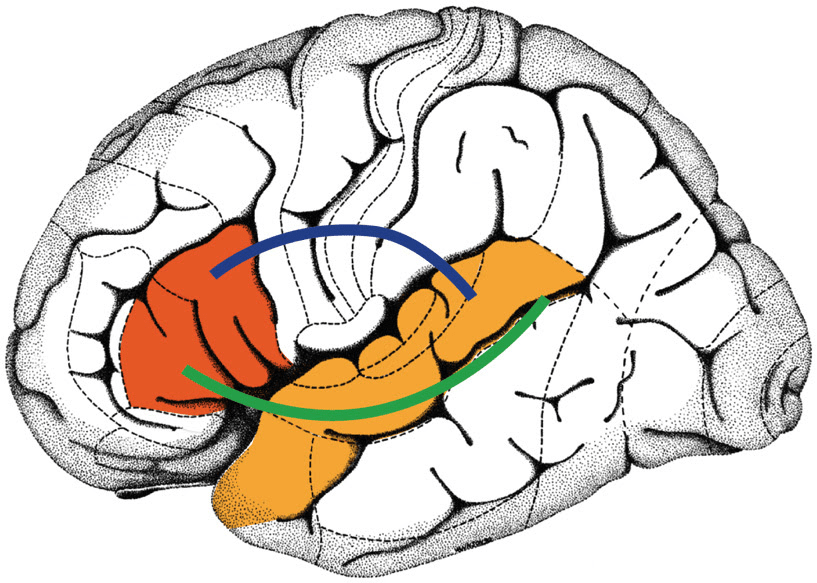
Language Environments and Brain structure in infants
I came across this article and it is interesting. Perhaps articles are always interesting when they reinforce your clinical ‘values’ as a therapist.
With my ‘critical appraisal’ of evidence hat on I can see maybe each child would have wider language input than parent interactionns. However it is interesting to see a connection between strategies and brain development. I remember someone from the Michael Palin Centre talking about this when I did their training – and so there seems a growing body of neuro research around how a language environment affects brain structure. I have no idea how the children coped with those MRIs. The tool they used to sample parental interaction at home sounds interesting.
The Language Environment included: Turn taking (assume this was in play) Child-directed speech (child’s interests), Parentese – speaking with a higher pitch and slower tempo
“turn-taking in play, child-directed speech , and use of parentese are documented predictors of llater cognitive and academic achievement, and should be implemented as early as possible in both home and educational settings.”





 Speech & Language Therapy Training & Development